

The Young People and Safe Community Project, funded by STAR-Ghana Foundation and led by trained community volunteers, was implemented in schools in South and Central Tongu Districts of the Volta Region. The project tackled menstrual hygiene challenges that hinder girls’ education and dignity. Period poverty—driven by high product costs, poor facilities, and cultural stigma—causes girls to miss up to 13 school days annually, leading to absenteeism and dropouts. Through a peer-to-peer, volunteer-led approach, the project promoted sustainable menstrual hygiene management (MHM), empowering girls to stay in school with confidence and dignity.
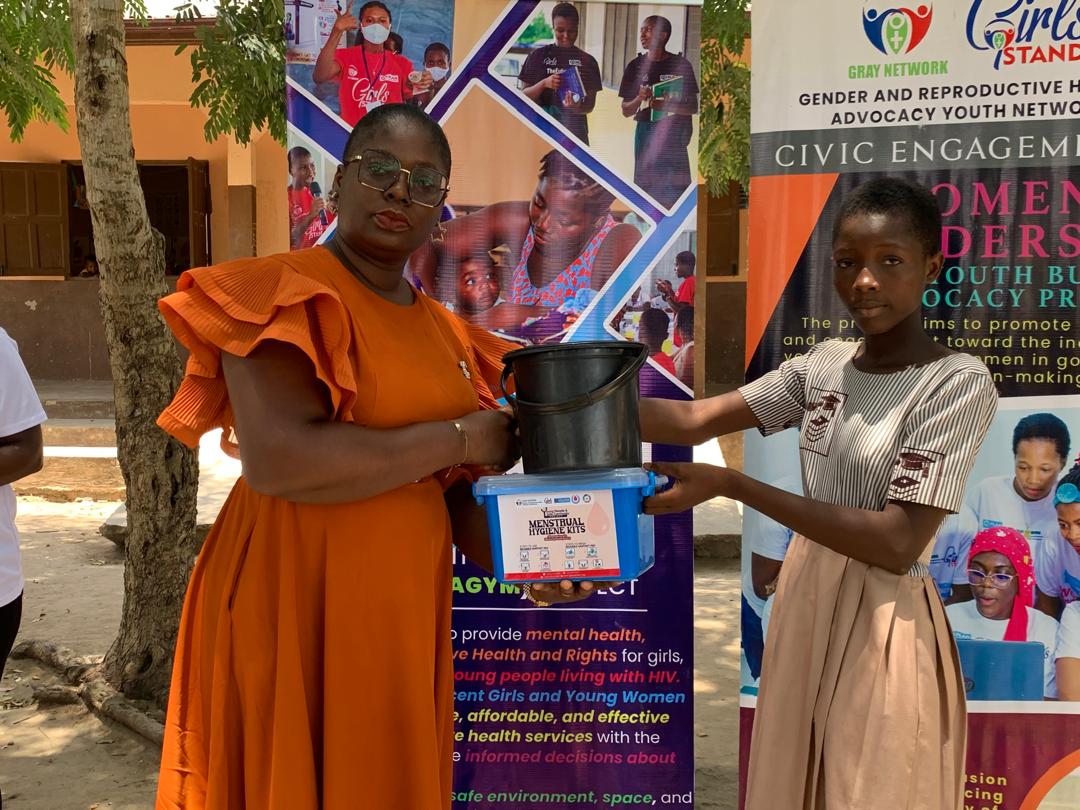


- Production and distribution of reusable sanitary pads: Volunteers produced pads and directly distributed them to 68 adolescent girls.
- Formation of health clubs in three schools, facilitated by volunteers to promote menstrual hygiene awareness.
- Community sensitization programs conducted by volunteers in three project communities.
- Volunteer-led radio discussions on menstrual hygiene management, reaching a wider audience.
- Advocacy with assemblies on sanitation in school development projects, championed by trained volunteers.
Direct Beneficiaries (Individuals):
- Adolescent Girls & Young Women (Pads & Clubs): 170
- Boys & Young Men (Health Clubs & Sensitization): 109
- Community Stakeholders: 3
- Children (<18 years): 66
- Youth (18–35 years): 206
- Other Groups (Fathers, Mothers, Leaders, etc.): 73
- Persons with Disabilities (PWDs): 4
Community Reach:
- Sensitization participants: 1,313 (393 males, 957 females, 37 youth)
Media Reach:
- Radio listenership: ~30,000
- Reduction in School Absenteeism: 69 girls now attend school regularly during menstruation, thanks to pads produced and distributed by volunteers.
- Improved Classroom Concentration: Girls reported better focus, confirmed by teachers, due to confidence built through volunteer-led education sessions.
- Improved Academic Performance: 29 girls noted better results due to consistent attendance.
- Reduced Stress & Restored Dignity: 54 girls reported lower anxiety and greater confidence.
- Behavioral Change Among Boys: 121 boys stopped teasing girls; many now educate sisters and classmates—outcomes of volunteer-led school clubs and sensitization.
- Community Awareness & Support: Over 1,350 community members now openly discuss menstruation, with parents and leaders showing increased support thanks to volunteer mobilization.
- Environmental Impact: Volunteers promoted reusable pads, reducing plastic waste from disposables.
Volunteers were central to the project’s success. They:
- Produced reusable pads and managed distribution.
- Facilitated health clubs and peer education sessions.
- Served as panelists on radio programs, sharing local voices.
- Mobilized communities for sensitization events.
- Mentored students, monitored pad usage, and supported teachers.
Their dedication reduced costs, ensured cultural sensitivity, built trust, and secured strong community buy-in. The project’s sustainability and impact are largely due to their ownership and commitment.
The project tackles period poverty—a major barrier to girls’ education in rural Ghana. By engaging community volunteers, it has restored girls’ dignity and confidence, reduced stigma, built supportive attitudes, and strengthened community ownership. This shows that investing in menstrual hygiene is key to advancing girls’ education, health, and equal opportunities, while community volunteerism offers a sustainable model for gender equality and empowerment.